Oct 26, 2007
 I propose aujourd’ to you; today to discover list words most frequently used in French written language. C’ is the logical continuation of the preceding article: Recite your lists of vocabulary in foreign languages with jVLT.
Indeed, c’ d’ is quite beautiful; to learn from lists of vocabulary, but the finality c’ is well of s’ in being useful. Then what could be more useful than to control the words really important and to leave side, initially, the futile one?
This list, c’ is EduScol which provided it to us and here the bond: List frequency of the words of the written French language.
It is available in several format and I advise you in particular the list of the words classified by nature and decreasing frequency.
It will be noted that certain basic words qu’ one generally learn in the first pages from the handbooks d’ training of the foreign languages are not present, for example to swim or sweep.
If that bores you d’ to learn from the lists of vocabulary, you can also consult a list of short made up sentences with the 5000 most frequent words at PONTT.
Oct 17, 2007

To widen its vocabulary in one foreign language, it is common d’ to use lists of vocabulary. However, lorsqu’ one uses a list paper, one ended always unconsciously up retaining l’ word order.
If you seek a solution with this problem, I propose to you to discover the software jVLT (java Vocabulary Learning Tool). This small freeware proposes to make you recite the vocabulary d’ a foreign language in a random and automatic way thanks to quiz.
Here is small a présentation…
To see the continuation »
Oct 4, 2007
 To translate a word in one foreign language, it is often practical d’ to use them dictionaries on line . Et ça peut être suffisant pour une utilisation occasionnelle.
Par contre, pour une utilisation un peu plus intensive, il peut être bon d’installer des dictionnaires en local sur sa machine. C’est ce que propose le freeware StarDict, une référence en la matière. Conçu par Hu Zheng, ce programme vous permettra même de vous initier aux langues asiatiques si le coeur vous en dit.
Voici un petit apperçu du logiciel…
Lire la suite »
10 juin, 2007

Une technique connue pour mémoriser le vocabulaire d’une langue étrangère est de visualiser dans sa tête l’objet ou l’action décrite.
En effet, chez la plupart des gens, la mémoire visuelle est beaucoup plus performante que la mémoire de l’écrit.
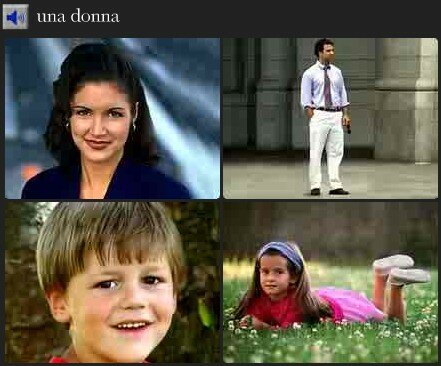
Le logiciel créé par Rosetta Stone s’en inspire. C’est ainsi qu’au lieu de faire une association entre le mot en langue maternel et le mot en langue étrangère, on fait directement l’association entre l’image et le mot en langue étrangère.
Il paraît que les résultats sont remarquables. J’ai testé leur démo et la méthode est très ludique : il est bien moins ennuyeux de travailler avec des images que des listes de vocabulaire!
Je leur ai déjà envoyé un email au sujet de la traduction en malgache 
Voici l’adresse de la démo en ligne :
http://www.rosettastone.co.uk/en/individuals/demo